Satellite TV Reception on Pelješac and Korčula: From Dish to Crystal-Clear Picture
In a world where technology has become an essential part of everyday life, the quality of audio and video systems in homes on Pelješac and Korčula plays a key role.
We have come a long way from the early days of television to today’s advanced satellite systems. Let’s explore how audio/video technology has evolved, with a special focus on satellite reception and the channels available in this part of Croatia.
A brief history: From black-and-white to HD
In the early 1950s, a TV set was a luxury only a few could afford, and on Pelješac and Korčula it was a genuine rarity. Black-and-white pictures and mono sound were the norm, and reception depended on the strength of the transmitter and the quality of the antenna.
In the 1960s, color revolutionized our living rooms, and stereo sound became a reality in the 1970s.
Standards that shaped the industry
New technology brought new standards. The PAL color system dominated most of Europe, Croatia included, while France and the countries of Eastern Europe used SECAM.
In the 1990s, digital television began to replace analog, bringing the DVB standards – DVB-T for terrestrial, DVB-C for cable and DVB-S for satellite television – which significantly improved reception quality on Pelješac and Korčula.
The evolution of satellite reception: From huge dishes to compact solutions
Once reserved for enthusiasts with enormous dishes, satellite reception is now available to almost everyone on Pelješac and Korčula.
The first commercial satellite TV transmissions began in 1965 with the launch of Intelsat I (Early Bird), and the technology developed rapidly.
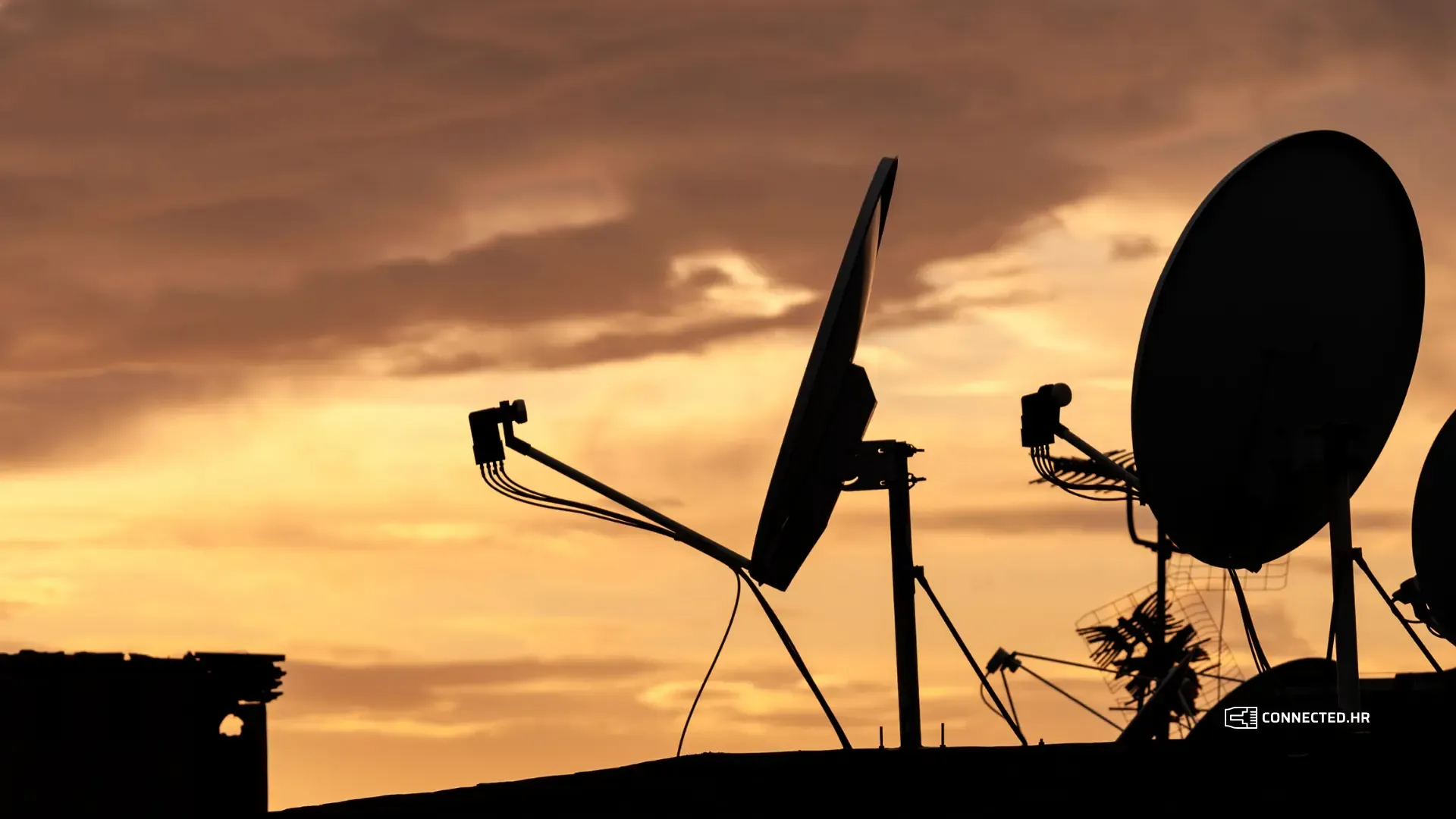
Today’s satellite dishes are smaller, more efficient and can receive signals from several satellites at once – especially useful in this area, where a good terrestrial signal can sometimes be hard to get.
Comparing technologies: Why choose satellite reception?
Compared with terrestrial reception, satellite TV offers several advantages:
- A wider choice of channels, including international channels for tourists
- Better picture and sound quality, especially in HD
- Broader coverage, ideal for rural and coastal areas
- A stable signal with a correctly aligned dish, although heavy rain or snow can temporarily weaken reception
Popular satellites and channels in Croatia
For viewers in Croatia and neighboring countries, a few key satellites offer a wide choice of channels:
Eutelsat 16E
- 16° East
- The Eutelsat 16A satellite has been replaced at this position by the newer Eutelsat 16D
- The primary satellite for the Croatian market
- Carries Max TV, Total TV and numerous regional channels
- Also offers popular international channels such as CNN, Eurosport and National Geographic
Astra 19.2E
- 19.2° East
- Popular for German and Austrian channels
- Offers channels such as Das Erste, ZDF, ORF, Arte and many themed channels
Hot Bird 13E
- 13° East
- Known for Italian and French channels
- Also carries many free-to-air international news channels such as BBC World, France 24 and Al Jazeera
Thor 0.8W / Intelsat 10-02
- 0.8°–1° West
- One of the main positions for Nordic pay-TV platforms such as Allente (formerly Canal Digital)
- Also used by Central and Eastern European pay-TV platforms, e.g. Digi TV in Romania
- Most channels are encrypted and intended for subscribers of these platforms
Astra 3B
- 23.5° East
- Carries Czech and Slovak channels
- Also offers some Polish and Hungarian channels
Keep in mind that a single fixed dish may not be enough for optimal reception from all of these satellites.
Multifeed systems or motorized dishes can be the answer for enthusiasts who want access to a wide range of channels from different orbital positions.
Your choice of satellites and channels usually depends on your viewing preferences. Some satellites require larger dishes for good reception, especially at the edges of their coverage area.
Professional installation ensures you get the best possible signal and access to all the channels you want.
The future: 8K resolution and interactive content
Technology never stands still.
8K resolution is already knocking at the door, and with it comes the need for even more advanced reception systems.
Satellite reception will continue to play a key role on Pelješac and Korčula, especially in areas where fast internet is not available.
Common satellite reception problems and solutions
Despite all the progress, users still face challenges:
- Salt corrosion of equipment – regular maintenance is essential
- Interference from nearby hills – correct dish alignment is important
- Outdated equipment – periodic upgrades ensure optimal performance
Conclusion
The evolution of audio/video systems, and satellite reception in particular, has revolutionized the way we consume media.
Whether you are a movie buff, a sports fan or simply want the best picture and sound quality, satellite TV offers an experience that is hard to beat.
Thinking about upgrading your system, or having trouble with your current one?
Contact us today and experience the future of home entertainment!