VPN Technology: The Key to Secure Digital Connectivity

Virtual Private Network (VPN) technology is the foundation of secure digital communication in the modern world. Whether you work from home, access sensitive data or want to protect your privacy online, a VPN provides a secure tunnel for data traveling across the public internet. Join us as we explore how a VPN protects your digital communication and why it has become an indispensable tool in both business and private life.
What is a VPN?
A Virtual Private Network (VPN) is a technology that creates a secure, encrypted tunnel between your device and a destination network over the public internet. Think of it as a private road running through a very busy public highway – your data travels through a protected tunnel, invisible to other road users.
A VPN offers three key benefits:
- Encryption of the data being transmitted
- Hiding your real IP address
- Secure access to remote network resources
When you use a VPN, your network traffic is encrypted between your device and the VPN server, which means that local observers – such as your internet service provider or an attacker on a public Wi-Fi network – cannot see the content of your communication. Beyond the VPN server, however, the traffic continues over standard internet routes.
A brief history
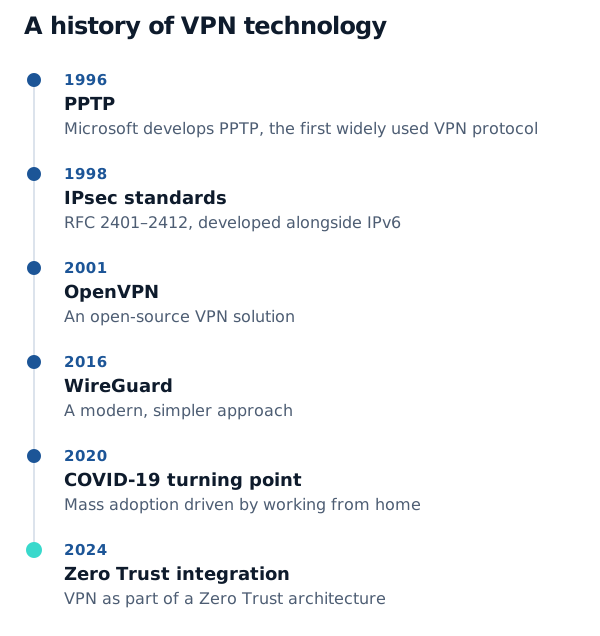
VPN technology has an interesting history that reflects the growing need for security in the digital age:
- 1996: Microsoft develops PPTP (Point-to-Point Tunneling Protocol), the first widely used VPN protocol
- 1998: IPsec standards RFC 2401–2412 are published, developed alongside IPv6
- 2001: OpenVPN emerges as an open-source alternative
- 2016: WireGuard brings a more modern approach to VPN technology
- 2020–today: VPN services expand, driven by the rise of remote work
Standards
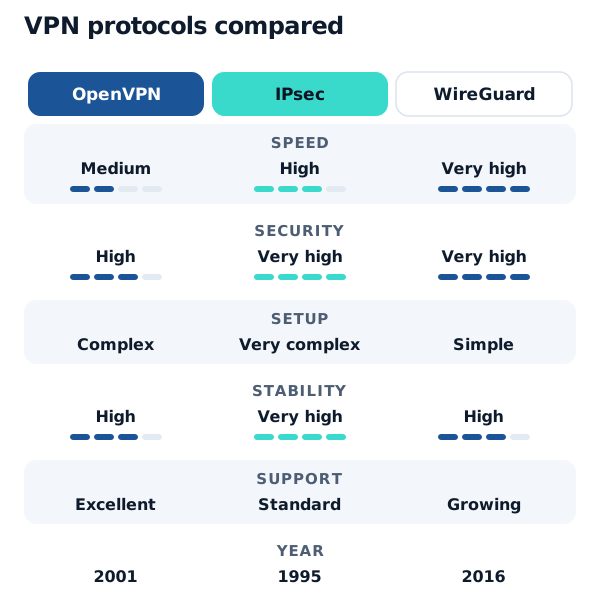
Today’s standards offer different advantages depending on your specific needs:
OpenVPN
- Extremely flexible and customizable
- Supports a wide range of encryption algorithms
- Excellent cross-platform compatibility
- Ideal for most user scenarios
IPsec
- Built-in support in most modern operating systems
- Very high level of security
- Excellent performance on hardware implementations
- The preferred choice for corporate environments
WireGuard
- Modern, streamlined codebase (only about 4,000 lines of code)
- Exceptionally fast performance
- Simple to deploy and maintain
- An increasingly popular choice for modern deployments
Configurations and use cases
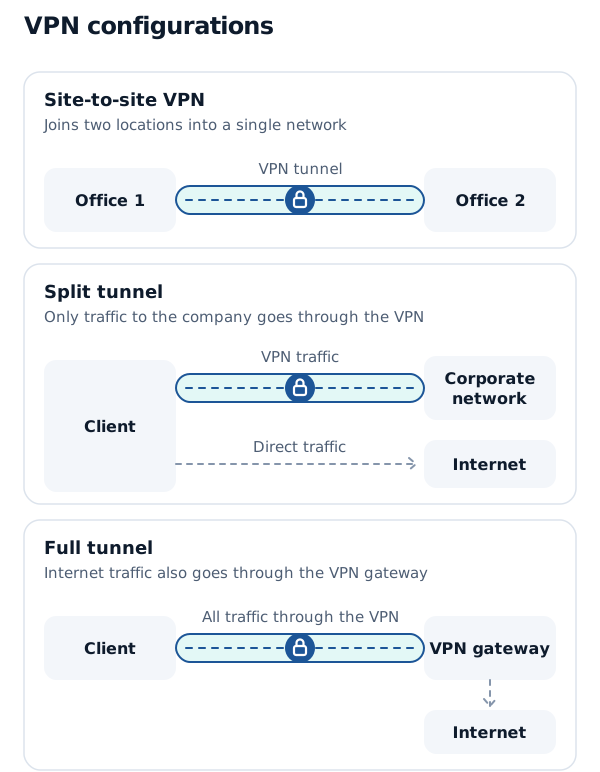
Site-to-Site
This configuration connects two or more locations into a single network:
- Ideal for connecting remote offices
- Enables resource sharing between locations
- Handles traffic automatically
- Transparent to end users
Split Tunneling
Allows traffic to be routed selectively:
- Specific traffic goes through the tunnel (e.g. business applications)
- All other traffic goes directly to the internet
- Optimizes speed and latency
- Reduces load
Full Tunnel
All traffic passes through the VPN:
- Maximum security and privacy
- Full control over network traffic
- Ideal for working with sensitive data
- Can affect internet speed
The future
VPN technology keeps evolving to meet new challenges:
- Zero Trust integration: VPNs are becoming part of broader Zero Trust security architectures
- Automation: Advanced systems for automated management and scaling
- Cloud-native solutions for better performance in cloud environments
- 5G integration: Dedicated solutions for private 5G networks
Key aspects of implementation
Performance
Choosing the right protocol for your needs
- WireGuard for top speed and modern systems
- OpenVPN for the best balance of security and compatibility
- IPsec for enterprise requirements and legacy systems
Using split tunneling where possible
- Only critical traffic goes through the tunnel
- Direct internet access for all other traffic
- Better performance for end users
Sizing the VPN infrastructure correctly
- Analysis of actual capacity requirements
- Planning for peak load
- Headroom for unexpected traffic growth
Regular maintenance and monitoring
- Service availability monitoring
- Speed and latency measurements
- Timely troubleshooting
Security
Implementing multi-factor authentication (MFA), e.g. two-factor (2FA)
- An extra layer of protection on top of passwords
- Using authenticator apps
- SMS or email as a backup option
Keeping software up to date
- Installing security patches
- Checking compatibility
- Backups before major updates
Using the latest encryption standards
- Strong, modern encryption (e.g. AES-256-GCM or ChaCha20-Poly1305)
- Regular review of security settings
- Following new security recommendations
Configuring the firewall properly
- Precise access rules
- Blocking unnecessary traffic
- Regular rule reviews
Scalability
Planning capacity ahead
- Estimating user growth
- Planning system upgrades
- Maintaining spare capacity
Using cloud-based solutions
- Flexible capacity
- Easier maintenance
- Ability to adapt quickly to changing needs
Building in redundancy
- Backup servers
- Alternative internet links
- An emergency plan
Scaling resources automatically
- Adjusting to actual demand
- Cost optimization
- Maintaining performance
Conclusion
VPN technology remains a key element of modern network security. Whether you are an individual who wants to protect your privacy online or a large organization that needs to connect remote sites, it is important to choose the right solution and implement it properly.
Connected can help you with:
- Choosing the optimal solution
- Implementation and configuration
- Maintenance and optimization
- Training and educating your team
Contact us for a free consultation about your needs.